

Australian Housing Market Two-Speed Economy 2026 | Follio
Watch here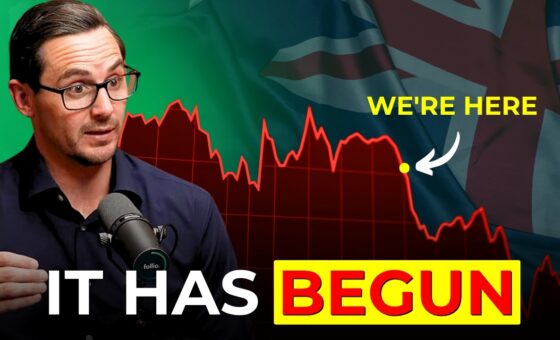
The Pattern That Has Preceded Every Major Australian Housing Downturn
Property investors do not fail in down cycles because they lack capital. They fail because they are reading the wrong data. Reece Beddall and Lachlan Delahunty dissect Australia’s two-speed property market in 2026, examine why the major banks have been wrong about market direction in every recent cycle, and identify the indicators that signal where a market is heading before mainstream commentary catches up.
Australia’s Two-Speed Property Economy
The divergence between performing and underperforming markets is widening. Sydney home sales are tracking 17 percent below the same period last year. Melbourne is down 14 percent. Both cities have listings rising above average levels, more supply meeting fewer buyers. Perth and Darwin are recording continued price growth, underpinned by genuine undersupply and population dynamics that differ structurally from the east coast.
The national property index tells you almost nothing useful. It averages markets that are moving in opposite directions. The suburb-level data on vacancy rates, listing volumes, days on market, and vendor discounting tells you what is actually happening.
Why Major Bank Property Forecasts Keep Missing the Mark
The major banks were materially wrong approximately 74 percent of the time on direction, timing, or magnitude during the last tightening cycle. Bank forecasting models are built on macro assumptions that ignore local supply and demand dynamics. They are also subject to institutional incentives that rarely align with individual investor interests.
The practical implication: build your own view from primary data sources rather than waiting for a bank to publish a forecast. By the time a bank updates its view, the window for acting on it has usually closed.
The Off-the-Plan Risk Most Investors Are Still Underestimating
In a rising interest rate environment with construction costs still elevated, off-the-plan property carries a risk profile that Reece and Lachlan examine in detail. The gap between contract price at signing and completion value is the pattern that preceded significant losses in previous tightening cycles. It is forming again in specific market segments in 2026.
Where the Data Points to Value Right Now
The sub-$800k market in certain locations shows signs of overinflation driven by first home buyer scheme activity. The opportunity sits in the segment above it: assets that are scarce, held by motivated vendors, and priced below replacement cost in supply-constrained markets. Reece and Lachlan identify the specific criteria that separate genuine value from overpriced sentiment in the current environment.
Published: 28 Apr 2026
Exclusive Content for Follio Property Podcast Listeners
Build the portfolio
of tomorrow.
I am...